Landing Operations
Assaults from the sea.
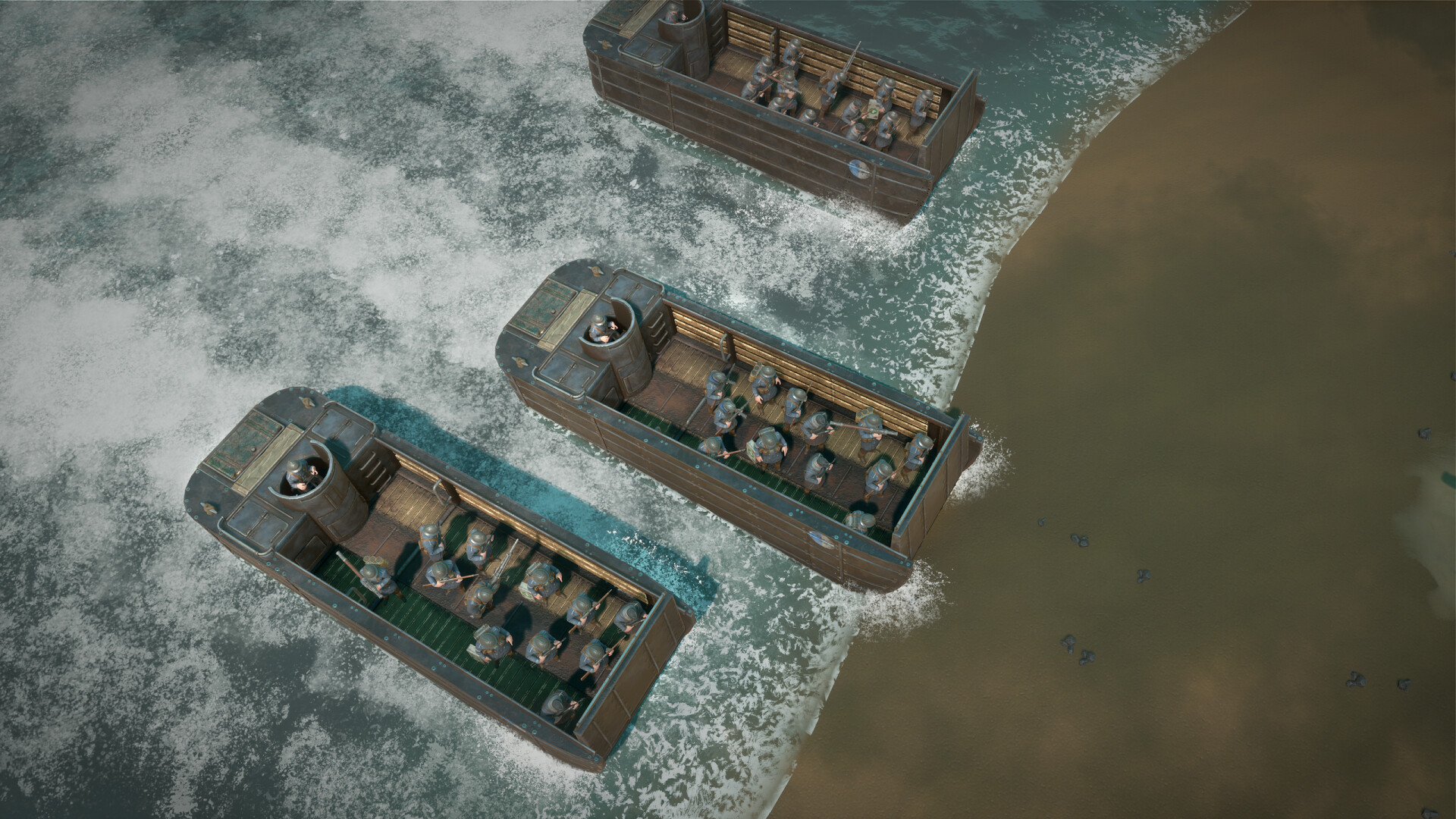
Landing operations put troops ashore from the water, opening new fronts and flanking entrenched enemies. But a landing without follow-up logistics collapses — getting ashore is only the beginning.
What this page teaches
- What a landing operation is
- Why landings open new fronts
- Why follow-up logistics is essential
- Coordinating an amphibious assault
What a landing operation is
A landing operation moves infantry, and sometimes vehicles, from water onto a hostile or contested shore. It is a way to attack where the enemy did not expect a front.
Landings can flank strong defences and pressure undefended coasts.
Why landings open new fronts
A successful landing creates a beachhead — a foothold the enemy must now defend against. This can split their attention and relieve pressure elsewhere.
The threat of a landing alone forces the enemy to garrison coasts.
Why follow-up logistics is essential
Troops ashore with no supply behind them are quickly contained and destroyed. A beachhead must be reinforced and supplied or it withers.
- Plan reinforcement waves before the first landing
- Establish supply by sea or a forward base quickly
- Build or capture a base so troops can spawn ashore
- Do not land more than you can sustain
Coordinating the assault
Landings are coordination-heavy: ships, troops, supply, and timing all have to align. They are operations for organised groups, not spontaneous solo efforts.
Communication before and during the landing decides its success.
When to attempt a landing
Attempt landings when a group can commit the troops, ships, and logistics to sustain a beachhead. A landing nobody can reinforce simply feeds the enemy easy kills.
Plan the sustain phase before the assault.
Related systems
Landing operations build on Naval Logistics and Large Ships, and connect to Field Bases for establishing a beachhead.
Landing troops on a hostile shore with no reinforcement or supply plan. The beachhead collapses and the assault is wasted.
Plan the reinforcement and supply waves before the first boat moves. Getting ashore is the easy part; staying ashore is the operation.